Closed Enrollment
Published Course
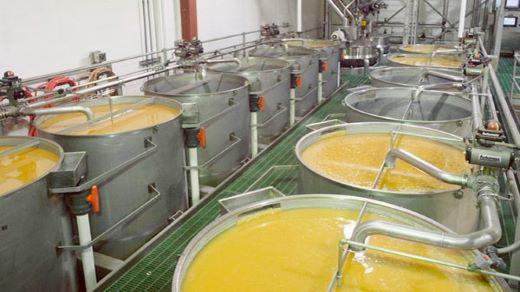
ReCon Water Processing for Snacks
ReCon Water Processing for Snacks
About this Course
Food recipes, whether potato chip, tortilla chips, grains, crackers or cookies, may only require a specific amount of water in the recipe, but the entire process may involve environmentally impactful steps—from washing the potatoes, transporting them, separating slices before they go into the fryer, washing the floor etc. In this course, you will examine how your plant uses waters and identify ways to conserve it, as well as how to use tools to measure water usage and conservation improvement with Key Performance Indicators. Take this course to find out—how does your plant compare?
Course Features
-
100% Online
Accessible from any device
-
Self Directed
Learn with a cohort but when it fits in your schedule
-
On-demand Video
Interactive video lessons
-
Beginner Level
No prior experience required
-
PepsiCo Internal Expertise
Brought to you by Global Sustainability Operations
What You Will Learn
- MOS/IPS water standards
- How to develop a line water balance using the PowerApp tool
- Benchmarking website and Best in Class performance
- How to avoid, reduce and reuse water
- Process water use optimization
- Best Practices
Course Overview
5 Lessons
17 Activities
2 Discussions
2 Live Events
Welcome
-
Welcome and Introduction
-
Attend: Kickoff Call
-October 7th, 2021
3 times will be offered, select the best time for you!

Join this kickoff call to learn about:
- Introduction to the CorpU platform and how it works
- Overview of this sprint and how it fits into the stages long term
- Description of final assignment
- Open-ended poll or discussion: What's the most recent thing your plant has done for resource conservation?
-
Complete or Update: Profile
-If you haven't previously, please take a few minutes to upload your picture and bio so everyone can start getting to know you. Make sure you include your current role, plant, and any hobbies. It's time to get creative.
If you completed your profile earlier, take a quick look and see if there is anything you'd like to update.
-
Read: Welcome
-Welcome to ReCon Water Processing for Food. While there is not much water in the food we produce, our manufacturing sites are using a huge amount of water, more water than our beverage plants need. There are many places in your plant where you can really make a difference in conserving water and water used in processing line is an important one.
You may be thinking that you don't have much control over the amount of water used in your plant. Whether you are making tortilla chips, cookies, or many other food products, the recipe calls for a very specific amount of water. Even though potato chips themselves don't contain added water, the potatoes must still be washed, transported, and the slices separated before going into the fryer.
As part of this course, you will be looking critically at how your plant uses water and identify not only ways to conserve this precious resource, but also how to measure improvement with an important Key Performance Indicator (KPI). How does your plant measure up?
-
Water Processing for Food
-
Water Use Introduction
-
Read: Production Line Water Use
-Production Line Water usage is an accounting of all water input for a single manufacturing line. For a potato chip line, this may include:
- Destoner/Flume
- Peeler
- Halver
- Slicers
- Slice washer
- Starch recovery
- Defoamer
- Sanitation
If the line produces tortilla chips, this includes:
- Corn cooking
- Corn soaking
- Corn transportation
- Corn washing
- Masa moisture
- Sanitation
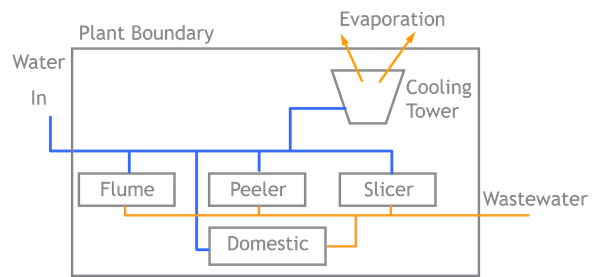
The image below shows the overall flow of water in a production plant. While the elements in the center may vary based on the type of food being produced, the sections that are consistent are the amount of water flowing in, what is lost to evaporation or included in the product, and the wastewater flowing out. Later in the course, you will have the opportunity to draw a similar "map" of water use based on your own plant.
-
Read and Reflect: Water Use Distribution
-Now that we've started considering how water flows through your plant during production, let's take a look at how the water is used. Overall, food products contain very little water compared to beverage products but the majority of water used in the plant is used in the production process. The chart below is an example of how water is used in a food plant.
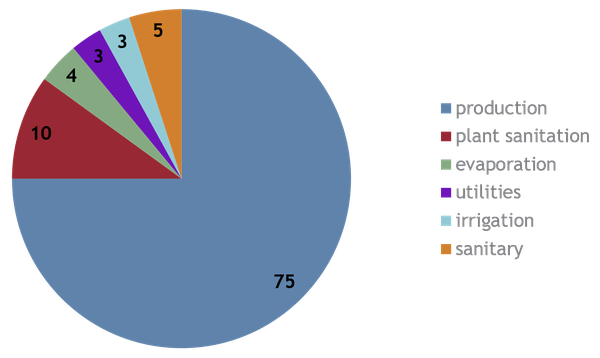
If very little water is in the product, how is the water being used in your plant? Enter thoughts based on your plant in the space below.
-
Read: Key Performance Indicator
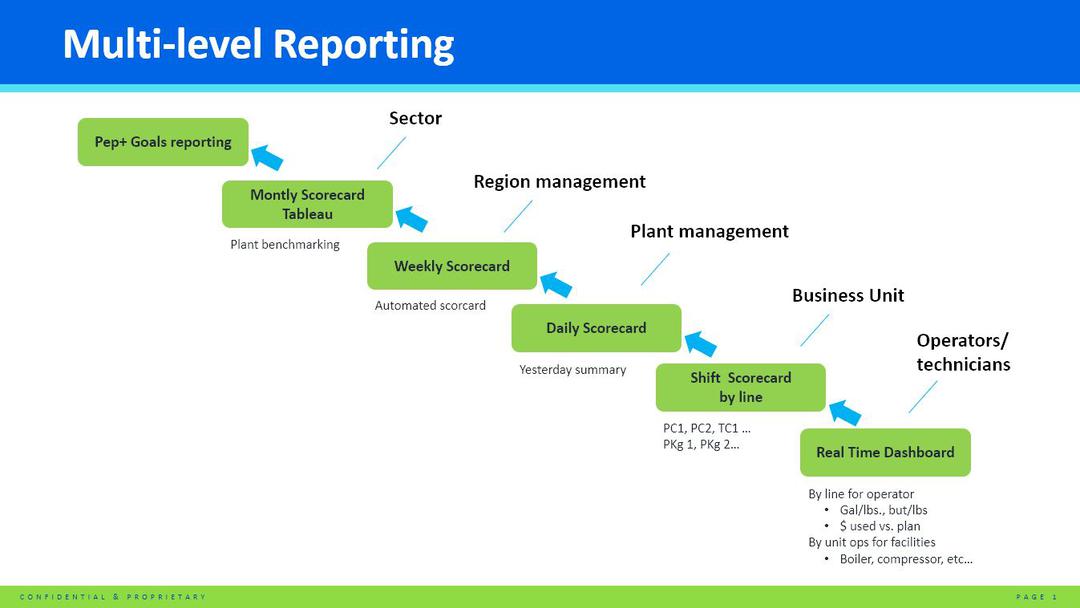
-The best water Key Performance Indicator (KPI) of processing line is the Water Use Ratio (WUR) which represent the water use per unit of production. Absolute water use by line isn't really useful as it doesn't provide sufficient perspective since it doesn't take any production volume into consideration. WUR is measure in liters per kg or gallons per pound of product, depending on your measurement system. Processing resources and process technicians should be aware of this metric and have good visibility on it. In the ideal situation, it should be measured hourly, and if it's not possible, measured by shift. This is an important metric to discuss during shift meetings so everyone is aware of the current trend and could evaluate/implement potential improvements.
If your site is in a high water risk area, tracking water consumption should be taken to a much higher level. Sub-level tracking is the best practice and the production line should be sub-metered. Below are some examples:
Potato chip lines
- Potato receiving area water consumption
- Raw potato preparation area water consumption
- Slicing and washing water consumption
Tortilla chip lines
- Corn cook and soaking water consumption
- Corn washing water consumption
-
Read: Major Water Users
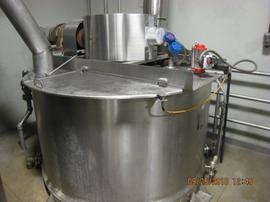
-As you think about the water users in your plant, here are some places to consider:
- Product content
- Initial and intermediate cleaning
- Product transport
- Heat transfer medium
- Sanitizing agent
- Utility generation and distribution
Potato chips require large amounts of water for cleaning and transport of the potatoes, for peeling and potato slicing. Tortilla chips also use large amount of water water to wash, soak, and transport the corn as well as in the corn mill.
Even if there is very little water in the products produced in your plants, sanitation accounts for much of the water used. Other water users include the plant break rooms, cafeterias, etc.
For plants producing cookies, crackers, grains, and cereal, water use is usually not tracked and is therefore not managed. Hoses may not have spray guns at the end to control water flow, and it's possible that water is used for floor sweeping instead of getting a broom. Another area to consider is using the mechanical removal or scraping away of product instead of using water to blast residue out of the way. Look at opportunities for cleaning without using water.
Water overuse in often observed in most plants and have a direct impact on WUR. Here's a few examples that could usually be addressed with a solid awareness campaign or without minimal investment.
- Water is still flowing while there is no production taking place (this is usually happening during changeovers, mechanical breakdown or at the end of the production)
- Incorrect equipment set-up. Assess for continuous filled overflow as this is a sign that something is not quite right.
- Water on the floor caused by water sprayed outside of the product zone. On top of representing a safety hazard, this is also a sign that something is not well adjusted.
- Worn-out or incorrect spray nozzles could use a significant amount of water. When was the last time were they inspected? Are they as per the IPS or 1000 points audit. Check with your SETs, they should know or be able to help.
- There is many conveyors with underneath pan equipped with spray bar for self cleaning capability. Are they set on a timer, are they appropriately set?
Inappropriate water use could also have an impact on WUR.
- Is every line/department equipped with brooms and dustpans so people will not be forced to always use the water hose during housekeeping activities?
- Sometime plants could use more water on some equipment to compensate for ineffective maintenance activities. As an example, people could install a small water hose to help self-dislodge potato debris build-up from conveyors. Build-up are often the result of worn-out belt that is not replaced in time or incorrect repair. Situation like this eventually become the new normal and impact the WUR of the line.
-
Discuss: Water Use
-Your water supplier sent out an emergency communication that in about an hour they will reduce the amount of water coming into your plant due to some issues they are experiencing. You can't stop production, so you run out to the floor (feel free to take a walk in your plant for inspiration) to identify five ways you can immediately reduce water use to keep the plant running.
Ground rules:
- Items on your list for reducing water use can be implemented immediately (or within the next hour)
- The plant must keep producing while maintaining product quality
- No impacts allowed to employee safety
- There is no capital allowance because there is no time to buy anything
Share your findings with the group below and discuss the following:
What is preventing you from making these changes in your plant right now?
-
-
Water Benchmarking
-
Read: Daily Water Use in Production
-It's important to understand the water flow throughout the production line and how water is used in daily activities around the line. Once you understand how your plant uses water, you'll be better able to determine ways to reduce use that don't impact your product. Some ideas are below:
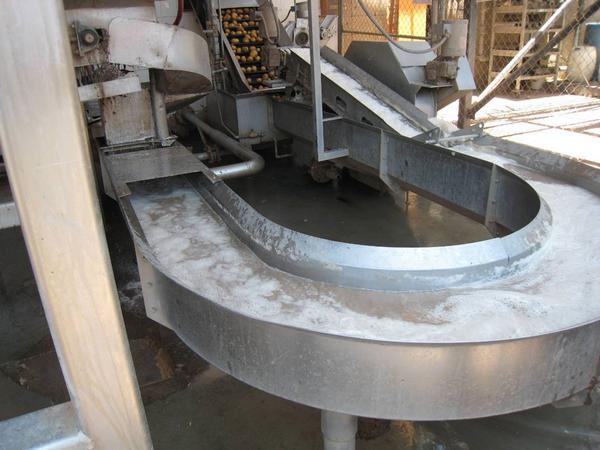
In potato chip plants, the largest water use is in cleaning and transporting the potatoes.
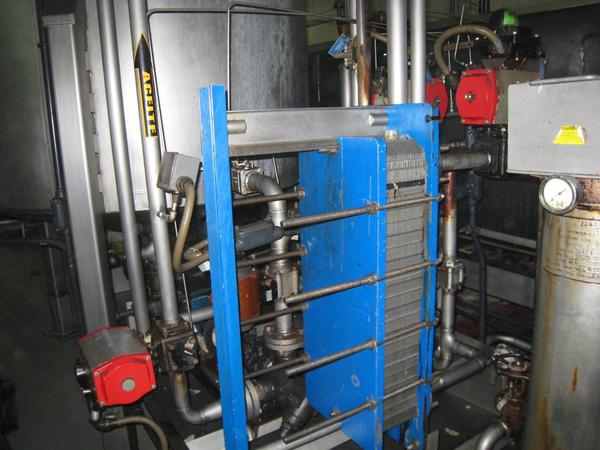
For plants producing fried products, a heat exchanger is used to cool down the oil for shutdowns to protect flavor and freshness. In the example below, the heat exchanger cools the oil by water flowing at 757 liters per minute (200 gallons per minute). This is single pass cooling. The water runs through the heat exchanger and then is discharged into the sewer, meaning the water is used once and then wasted.
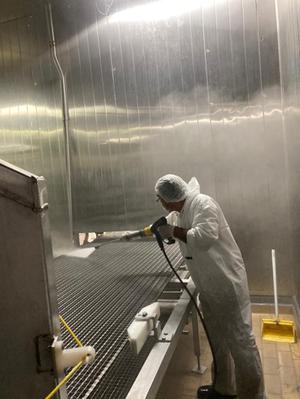
If you are producing crackers, cookies, or grains, consider the water in the product, where your plant uses (and re-uses) water, water going down drains, overflowing water, but most of all, consider the amount of water used in your production line cleaning and sanitation.
-
Watch: Water Benchmarking Tool and Standards
-Have you wondered how your plant is doing with water use? Royce Li, Financial Senior Analyst, shows you how to use the Water Bench-marking Tool linked below that compares water use per site against established standards.
After you watch the video and understand how to use the tool, take a few moments to look up your plant.
Note as of March 2023, the water benchmarking tool is being updated to the MOH Utilities Gen1.5 Tool. See the document attached as an overview.
-
Complete: Exercise
-Access the Water BenchMarking Tool with the link below.
By adjusting the "% of total production" sliders, try to identify similar facilities to yours in your own sector as well as internationally. Play with sliders and explore. It is unlikely that you will find one that will be exactly like to yours so you may have to loosen-up the ranges. The intent is not to find a perfect match but sites to compare with.
- Compare your plant WUR (l/kg) with these facilities. Is it better or worst?
- Look at the "Opportunity to Standard". Is the financial opportunities of your plant running at standard in line with your assumptions?
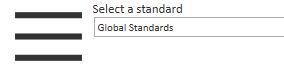
- Click on the three lines icon to see the Standard by line size and technologies. Note the one(s) associated with your line(s) as this will be uses in tomorrow's activities.
-
-
Plant Performance
-
Reflect: Comparing Lines
-Access the MOS Water Balance Tools with the link below.
If not done yet, please add this link in your browser bookmarks as you might need to access this again in the future.
Complete the line balance calculations of your largest line. This will take some time to gather information, so it is not expected that you complete this on your own today. We highly recommend that you work on this in close collaboration with your local SMEs. It you didn't reached out to them already, please do so immediately and plan a few working sessions to get this completed.
Once completed, come back to the training platform and complete the following task.
In the text field below, answer the following in preparation for a discussion to follow:
- How does your line compare to the standard?
- What are the biggest differences in performance?
- Can you explain the differences?
- What thoughts or "ah-ha" moments did you experience?
-
Discuss: Your Findings
-Share your biggest findings from the activity you just completed, including any obstacles or challenges you face in determining potential solutions for reducing water use. You can upload pictures (with plant management approval), short videos, and diagrams.
Can you explain why some plants perform better than others?
-
Read: Best Practices
-Collect a list of tactics and projects and incorporate them into your plans. You can do that by taking a look at the "Road to Great Performance" tool with the link below.
If not done yet, please add this link in your browser bookmarks as you might need to access this tool again in the future.
There you will find an extensive list of best practices to reduce water consumption. Below are some additional ideas that don't require a significant investment and that can have immediate results.
Eliminate leaks and spillage
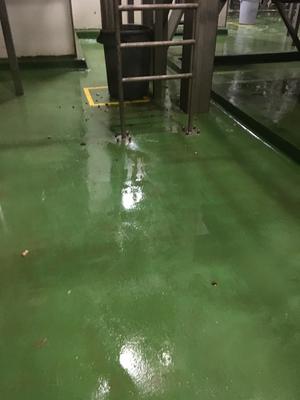
If not done yet, it is crucial to have a solid elimination program for water leaks and spillages. Having a production floor that is continuously wet is a sign that you have water leaks or that you have splashing or spillage points. Get these fixed and get the word out to employees that leaks and spillages are simply not acceptable because they not only impact sustainability, but they also impact food safety and their own workplace safety.
Avoid water use
The easiest way to minimize water consumption is to simply avoid using water whenever possible. Take a close look at how water is used in your plant. Is water being used when another way will work just fine, such as using a broom to clean floors? Do all your hoses have nozzles to control water flow? Here is a list of ways to avoid water use:
- Implement effective line start up and shutdown procedures (idling equipment uses resources unnecessarily).
- Establish an off-production protocol to maximize the efficiency of the utilities the plant generates (steam, cooling water, compressed air, and nitrogen).
- Ensure that the process technician is well equipped with brooms, scrapers, and squeegees to complete their housekeeping tasks.
- Minimize line shutdown and start-up. Changeover can be a great source of water loss.
- Check the overflows. If they are continuously flooded, there is something set incorrectly. Overflows are generally there for abnormal situations, not day-to-day operations.
Reduce water consumption
If you can't avoid using water, at least reduce consumption. Every employee needs to know that reducing consumption is important to PepsiCo and that every single person in the plant has a role to play and your task is to increase awareness.
You can't control what you don't measure. Track water consumption using liters per kilogram or gallons per pound on each of your lines. The more specific and frequent the better. Weekly is not enough; tracking should be at least by shift, but hourly is better. You can show employees immediate results of their efforts, increasing motivation to continue.
- Run the production lines according to the recommended specifications. Many people think that more water equals a better finished product, but this is not true. Because of that, some might use more water than the recommended specifications. Extensive tests and analyses were conducted to find the optimal equipment settings, so make sure people stick to these.
- Some other plants have a tendency to systematically operate equipment in the upper end of the operating range. Operating ranges were establish to provide some flexibility so that we could adjust according to certain situations. If we produce with thin skin potatoes, do we need to use the maximum recommended amount of water?
- Reduce finished product waste. You aren't just wasting the product, you are also wasting the water used in production.
- Develop a nozzle inspection program. Worn out nozzles use a significantly greater amount of water than necessary.
- There is many places where we are sporadically spraying water for self cleaning purposes or to keep the raw material wet. (Inspection table, whole potato inspection, cork soaking tanks, corn hopper, drain belt, etc..). Are these timer set appropriately to ensure that we are not over-processing and wasting water.
As you can see, there are many actions you can take to quickly impact the water consumption in your plant. If you frequently measure water use, you'll be able to show everyone how much water even small steps can save. Next, we'll ask you to design an improvement plan to reduce the water consumption of your plant so feel free to use these ideas plus some of your own, including the items you came up with in the earlier discussion.
Water reuse applications
Additionally to the low/co cost tactics described above, there is a suite of approved water reuse applications in foods manufacturing. Take a look at the "FS.REC-000004 Approved Water Reuse re-Applications list for Food manufacturing" file in the water reuse governance folder with the link below.
Since most of these tactics will require investments, you will probably not be able to implement them immediately. This is why it will be important for you to develop a balanced action plan. An action plan that will have tactics that will involve some process changes (ex.: shutdown procedures, visual job aids), some people changes (increased awareness, better performance tracking, etc..) as well as technological changes.
Water Reuse Approval Process
While working on this you, you and your team might identify a potential way to reuse that is not listed in the document listed above. If it is the case, be aware that any water reuse application must carefully consider and meet all pertinent local and national regulatory requirements. R&D Snacks Platform Team must be notified of any project where the reuse water may come in contact with ingredients, product, packaging, or product contact surface (including indirect contact). R&D will assess project impact on product quality and food safety and direct to the appropriate governance process.
-
Complete: Your Improvement Plan
-Using the template below or the one usually used in your sector, develop an improvement plan that will help your plant reduce water consumption. Include more short-term than long-term tactics so you have actions you can take now as well as in the future. Evaluate the impact your plan can have, and make sure you indicate any support you may need to implement the tactics you listed.
Get inspired by the best practices shared in the previous activities. You could also find a lot of good ideas in the discussion tread of the water shortage exercises completed on the first day. Remember, any improvement even small will add-up and have an impact.
You will be sharing your improvement plan in the next activity.
-
Upload: Your Improvement Plan
-Share your improvement plan with your colleagues by uploading it below. Return to this page throughout the day to compare yours with other plans and see if there are additional action items you can add to your plan.
-
-
Capstone
-
Attend: Capstone Call
-November 3, 2021
3 times will be offered, choose the one that best fits your schedule!
Agenda:
- Best of the best tactics
- Interview with selected participants
- Group discussion of best practices, successes with completing the profiler
- Group discussion of next steps - what do you want to learn next?
-
• Recommended for: ReCon leaders, Project Engineers, Process Improvement Engineers, Processing SET
• Pre-requisites to take this course: Water fundamentals (Recommended)
For 2022, this course will be offered starting April 18, 2022. Register here at least as week prior to the start of the course. Please keep in mind your schedule and time commitment required prior to registration.